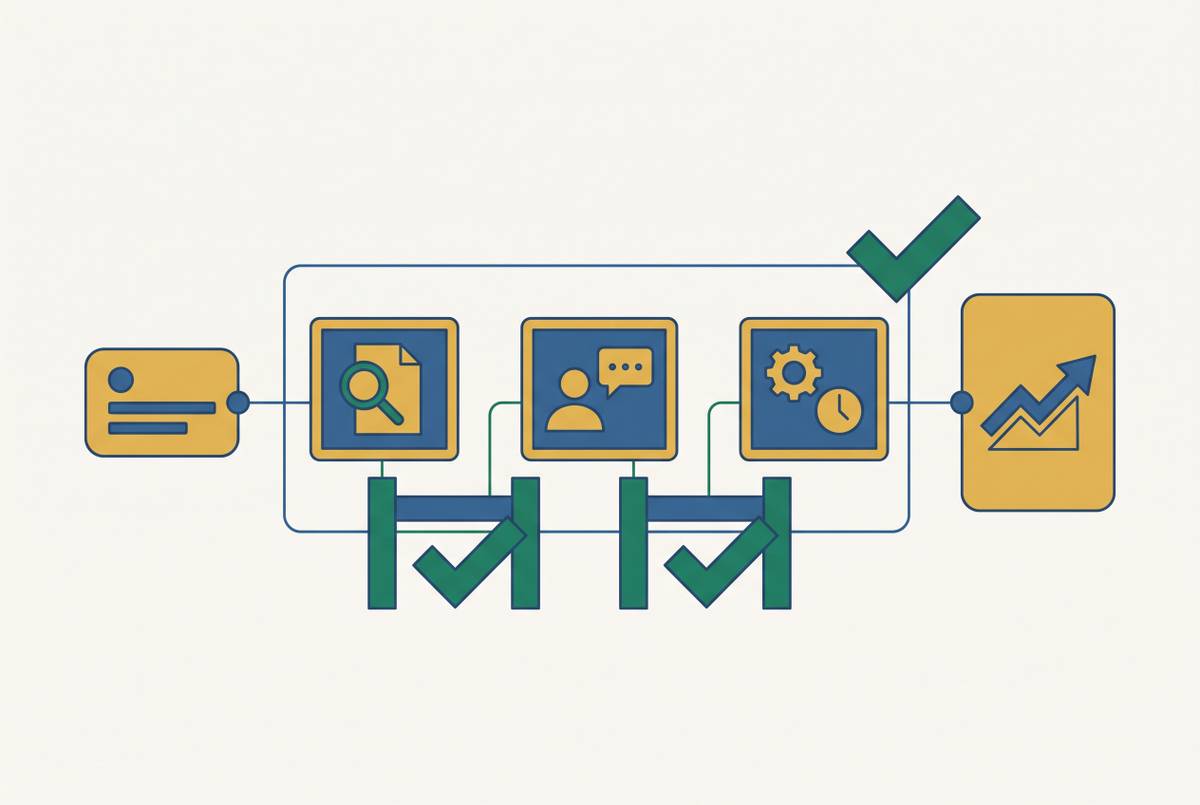
LinkedIn Creator Payout Structures and Payment Timing Standards
Payment timing shapes whether campaigns launch on time and creators return.
Most B2B marketing teams treat creator payment as a line item, something procurement sorts out after the deal terms are already locked. That gets the priority backwards. How and when a creator gets paid shapes whether the deal closes at all, whether the campaign launches on time, and whether that creator picks up the phone next quarter. Payment structure works as a negotiation lever, a risk allocation tool, and, over time, a reputation system that follows a brand from one creator relationship to the next.
What makes LinkedIn creator deals structurally different from standard vendor payments
A LinkedIn creator isn't a freelance copywriter turning in a deliverable, and isn't a media outlet running an ad unit. The creator's authority is personal. Their audience trust doesn't transfer to anyone else, and once a sponsored post goes live, it can't be unpublished or quietly reworked the way a landing page can.
A post tied to a product launch or a live campaign window loses most of its value if a payment dispute pushes publishing back a week. Delay isn't a minor inconvenience here. It kills the point of the deal.
Production cost swings hard by format, so payment terms can't be one-size-fits-all. A plain text post takes almost no production overhead, so there's little reason to front money on it. Video sponsorships command a real premium over text rates because filming, editing, and scripting eat actual hours. Document and carousel posts, usually 10 to 20 slides, run research and design heavy, and that kind of format holds a viewer's attention far longer than a quick scroll past a text post. That's the whole argument for paying the creator more up front to make it.
Leverage isn't evenly distributed either. A creator with 500,000-plus followers charging $10,000 to $40,000 a post sets payment terms from a position of strength, because brands are competing for a slot on their calendar. A micro B2B creator charging $200 to $600 a post has almost no recourse if payment slips. That gap is the single biggest reason identical contract language can mean two completely different risk profiles depending on who signs it. Relationship history matters just as much: a first deal with an unfamiliar brand carries different risk than a third campaign with a team that's already paid cleanly twice.
Nobody wants to think about tax and compliance until it's a mess. A US brand managing several creators typically faces 1099 reporting obligations. Bring in a creator based outside the US, and currency conversion, withholding rules, and cross-border transfer costs stack on top, none of which appears on a standard LinkedIn Ads invoice. That's what happens when a brand deal runs through an individual person instead of a platform's ad system. The payment structure a brand picks decides how much of that mess actually becomes visible.
The three payout structures and what each one is doing commercially
The fee is what a brand agrees to pay. The payment terms decide when that money actually becomes due, what has to happen first, and who eats the cost if approvals stall. Those are two separate negotiations, and treating them as one is where most disputes start.
Advance payment means money moves before, or partway through, production. A partial advance locks in a creator's calendar slot up front, with the rest due at a defined later point. For the creator, it cuts the risk of finishing all the work with nothing in hand, funds any production costs, and confirms the brand has actually finished its payment setup instead of promising to figure it out later. For the brand, it locks down a high-demand creator's time and lowers the hesitation a new creator might feel about a first deal.
The contract has to nail down specifics. Is the advance refundable if the brand cancels? What happens if the creator can't deliver? Does work start only once funds clear, not just once they're sent? What expenses does the advance actually cover, and when exactly is the remaining balance due? An advance shouldn't quietly hand the brand unlimited revisions or extra usage rights. Those need their own line items, spelled out separately.
Advance payment fits best for new relationships, formats with real up-front production cost, and any case where a creator needs to block off calendar time in advance.
Post-delivery payment triggers once a deliverable is accepted, published, or reported on, but "delivery" has to be defined with precision or the whole thing falls apart. Delivery could mean a first draft submitted, a final draft approved, a post actually published, campaign reporting completed, or an invoice accepted by finance. Those are five different moments, and they can land weeks apart. Payment terms that just say "after completion," without naming which of these triggers it, cause more creator payment disputes than any other single contract gap.
A solid contract sets an approval deadline and spells out what happens if feedback runs late. A late approval on the brand's side should never quietly push payment back too. This structure works for established relationships with dependable processes, for short single-post assignments, and for brands whose finance teams turn invoices around fast. The real risk occurs when a vague acceptance definition stacks on top of long net terms: a Net-45 clock that only starts once finance "accepts" the invoice can stretch a deal well past what either side thought they'd agreed to.
Milestone payment splits a longer campaign into stages, each fundable on its own: contract signed and slot reserved, first deliverables approved, posts published, final report delivered. Every milestone needs a specific deliverable, objective acceptance criteria, a due date, an invoice amount, a review deadline, and a way to handle disputed items.
The failure mode here is over-engineering it, building a milestone for every small step. That just multiplies approvals, invoices, and chances for something to stall, which defeats the entire purpose of the structure. Milestones make sense for multi-post programs, research-heavy content, video series, or any deal big enough that neither side wants full exposure if the campaign falls apart halfway through. The tradeoff is that milestone contracts demand more precision up front than the other two models.
None of these three is universally correct, but most teams default to post-delivery payment out of habit, not because it fits the deal. Post-delivery is the path of least resistance for finance teams used to standard vendor invoicing, and it gets applied to creator deals that look nothing like a vendor invoice. The right choice depends on how mature the relationship is, how long the campaign runs, how complex production gets, and how much risk each side can actually absorb if something slips.
Where the real delays in creator contract net terms come from
Net-15, Net-30, Net-45: these terms mean nothing unless the contract says exactly when the clock starts. That start date is the single most common point of confusion in creator deals. Does it begin at submission? At approval? When the invoice arrives in a vendor portal? At the end of a billing cycle? Those are four different dates, and defaulting to the wrong one can quietly turn a 30-day agreement into a 60-day wait in practice.
Net terms make more sense for agency-scale creator businesses than for an individual creator with no real leverage to chase down a late payment. Before work even starts, a handful of invoice details need to be locked in writing: the legal name and billing address of the creator's entity, a purchase order or vendor number if finance requires one, who the invoice goes to and how it gets submitted, tax details and withholding requirements, currency and transfer method, bank or platform fees and who covers them, proof of delivery required, and a named contact for payment questions.
The brand's finance team has a vendor setup process that nobody on the marketing side ever mentioned to the creator. The invoice gets submitted, sits in a queue, and the creator has zero visibility into why the money hasn't moved. It's a communication gap between two departments that never talked to each other, and the creator eats the cost of it.
Late-payment handling belongs in the contract as an actual sequence, not left to whoever remembers to follow up: confirm the invoice was received, share the invoice number and dates and amount, flag any missing paperwork, send a formal reminder as the contract specifies, and pause future work if the agreement allows it.
Jurisdiction matters too. In India, eligible micro and small enterprises may be able to access statutory delayed-payment protections through the MSME Samadhaan process. Standard net terms don't mean the same thing everywhere, and a brand running a global creator program needs to know which protections apply where before a dispute forces the question.
Escrow and platform-native payout infrastructure as the emerging middle ground
Escrow solves a trust problem that advance and post-delivery payments both struggle with. A brand deposits campaign funds into a neutral third-party account before work begins. The creator can see the funds are already sitting there, funded and waiting. Neither side is operating on a promise. Money releases automatically once the agreed conditions are met.
That structure removes risk on both sides at once. The creator no longer has to worry about a brand disappearing after the work is delivered. The brand no longer has to worry about paying an advance to a creator who never delivers. Escrow-backed setups tend to speed up campaign launches too, because creators are willing to start production the moment funds are confirmed instead of negotiating over when they'll actually get paid.
Platform tools are catching up to this need directly. Lumanu is a payment tool built for brands managing creator, freelancer, and influencer payouts, running $99 to $299 a month for brands and free for creators to invoice and get paid through. It handles vendor onboarding and 1099 paperwork, and connects to QuickBooks. LinkedIn itself has rolled out Stripe-backed payouts natively for creators in its BrandLink program, a clear sign the platform wants payment infrastructure built into the creator ecosystem itself, not bolted on by third parties. LinkedIn Creator Marketplace, which launched June 10, 2026 and is rolling out first in the US and Canada, sits inside Campaign Manager under "Content and Assets" and is meant to be the central hub for LinkedIn content partnerships, including creator discovery by topic and audience fit.
For a marketing team running several creator deals at once, manually juggling separate invoices, separate net terms, and separate vendor setups adds up fast. Platform-native or third-party payout tools collapse that into one workflow instead of five, and the retention math backs it up: cleaner payout processes have been tied to real jumps in contributor retention on the platform side. The same logic applies to a brand's in-house creator program just as much as it applies to a marketplace.
How campaign scope and creator tier should shape the payment structure a brand chooses
There's no universal best structure, but there's a common mistake: picking one structure and running every deal through it regardless of size. The job is matching the structure to the specific facts of the deal in front of you.
Advance payment makes sense for a first-time deal with an unfamiliar creator, for formats like video or carousel that carry real production cost, for a creator high-demand enough to have other offers on the table, or for a creator based somewhere extended payment terms simply don't work financially, think individual operators or non-US creators eating currency conversion costs.
Post-delivery payment fits established relationships with a clean payment track record, short single-post jobs with no meaningful production overhead, and brands whose invoice-to-payment turnaround runs under 15 days. It also tends to fit micro-tier creators charging $200 to $600 a post, where a milestone or escrow structure would be overkill relative to the dollar amount at stake.
Milestone structure earns its complexity on multi-post programs spanning weeks or months, on campaigns with a research or briefing phase before any content gets made, and on deals large enough that neither side wants full exposure if the campaign shifts mid-flight. Macro and top-tier creators charging $2,000 to $15,000-plus per post tend to fall in exactly this range, where the extra contract precision pays for itself.
A $400 single-post deal doesn't need a three-stage milestone structure. A $12,000 video series shouldn't run on a single post-delivery payment with Net-45 terms tacked on. Matching structure to scale protects both sides. Mismatched structure just adds friction nobody needed.
Relationship maturity should shift the structure over time, too. The right setup for a first campaign isn't necessarily right for the fifth. Brands that build a track record of clean, on-time payment can migrate from advance to post-delivery terms as trust builds, which is itself a good reason to keep records of how past payments actually went, not just what the contract said.
Scope changes deserve their own paper trail. Any shift in the brief, format, or deliverable should trigger a written change order covering the new fee, updated dates, and a revised payment milestone. A scope change absorbed informally, with a handshake and no update to the contract, is a dispute waiting to happen.
Why well-structured payment terms compound over time in the creator market
The market for LinkedIn creator relationships is getting more crowded on the brand side. LinkedIn Creator Marketplace launched June 10, 2026. LinkedIn's BrandWorks team, launched in March 2026, has grown substantially since launch, and is landing managed-account clients including SAP and Webflow. Top Voices 360 drove more than $20 million in revenue between May 2025 and May 2026. More brands are chasing the same pool of credible, trusted creators, and that competition changes the leverage equation.
In that kind of market, payment reliability becomes a selection filter. A creator fielding multiple inbound offers prioritizes the brand that pays on schedule, communicates clearly about invoice status, and doesn't require a chase to collect money that's already owed. It works the way anyone allocates limited time among competing options: reliability wins out over a slightly bigger fee attached to more hassle.
And it compounds. A creator who has a clean payment experience becomes a repeat collaborator. A repeat collaborator becomes a reference point other creators hear about, directly or indirectly, inside the same professional circles that talk to each other constantly. Payment terms are part of how a brand's reputation moves through a creator community that never really stops comparing notes. Get it right, and the next deal gets easier to close. Get it wrong, and word travels faster than most marketing teams expect.
Sources
- Best Ways to Pay LinkedIn Creators | Lumanu
- LinkedIn Plans Suite Of Creator Monetization Tools In Fiscal 2027, Documents Show
- LinkedIn Influencer Rates 2026: $500–$15K B2B Creator Pricing + Benchmarks
- LinkedIn's BrandLink now shares revenue with over 100 creators as platform builds fiscal 2027 monetisation suite
- LinkedIn influencer rates 2026: what B2B brands pay