Scaling LinkedIn Creator Programs From Pilot to Multi-Creator Operations
Structuring rosters by function and automating payments fixes programs that stall at scale.
Creator marketing on LinkedIn grew 171% year over year, and 55% of B2B marketers already run some kind of influencer program. Another 29% plan to start one within the year. Yet most of these programs stall at two or three creators, and it's rarely because the content underperforms. It's because the process built for two people falls apart under the weight of ten.
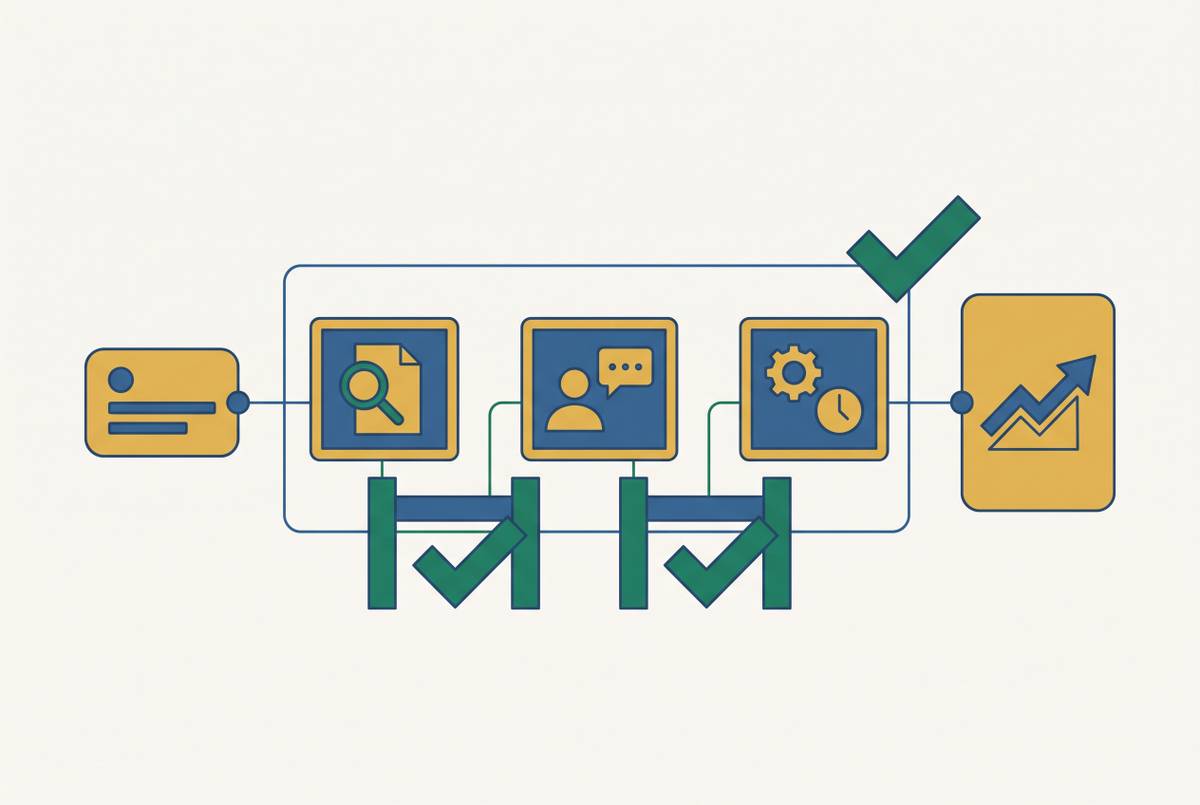
The process breaks because the informal systems built for two creators, a Slack thread, a spreadsheet, ad-hoc briefs, and manual invoicing, buckle under the weight of ten. Scaling without structural changes produces ten different interpretations of every brief, invoices that sit unpaid for weeks, and attribution data too inconsistent to act on. The fix runs on three parallel tracks: restructure the roster by funnel function rather than follower count, standardize the brief so every creator receives the same specific campaign objective, exclusivity terms, licensing language, and Thought Leader Ads intent up front, and replace manual payment with an automated payout system running on 50% at contract execution and 50% within 15 days of the post going live. A creator who has to chase an invoice for six weeks quietly stops prioritizing that brand's next campaign, and at ten-plus creators running simultaneously, that friction alone is enough to break a program nobody meant to break.
Two creators can run on a Slack thread, a spreadsheet, and a handshake about deadlines. Ten creators can't. Once volume climbs, the cracks show fast: briefs get inconsistent, invoices sit unpaid for weeks, nobody can say which post actually drove the demo request, and budget decisions turn into guesswork. None of that means the channel failed. The operation underneath it needs to grow up before headcount does.
Buyer behavior data on why the channel is worth scaling
Start with what buyers actually do. 59% of B2B buyers consume creator content on LinkedIn more than on any other platform, and 82% say that content directly shapes their decisions. That's not a nice-to-have audience, that's most of the market forming opinions before a sales rep ever gets a meeting.
The trust math backs it up. Expert endorsements are 1.7 times more likely than a company's own written content to tip a buyer toward one brand over a rival. The credibility gap between a trusted expert and a brand's own content is measurable.
Gartner's 2026 research found that 70% of the B2B buying journey happens before anyone fills out a vendor contact form. That journey plays out in peer forums, in LinkedIn feeds, in community threads, far from anything a sales team can see or control. So the brands whose creators are already showing up in that feed have already built the shortlist advantage. By the time a competitor's outreach team sends a cold email, the buyer's mind is halfway made up, and it was made up scrolling, not on a call.
Performance benchmarks that justify a larger creator budget
The return on this channel isn't subtle. Brands running B2B influencer programs outperform companies that don't by as much as 39% on engagement and brand awareness, and by 30% on revenue growth and lead generation, gains that sit at the pipeline level rather than in vanity metrics. Those aren't vanity numbers, they sit at the pipeline level.
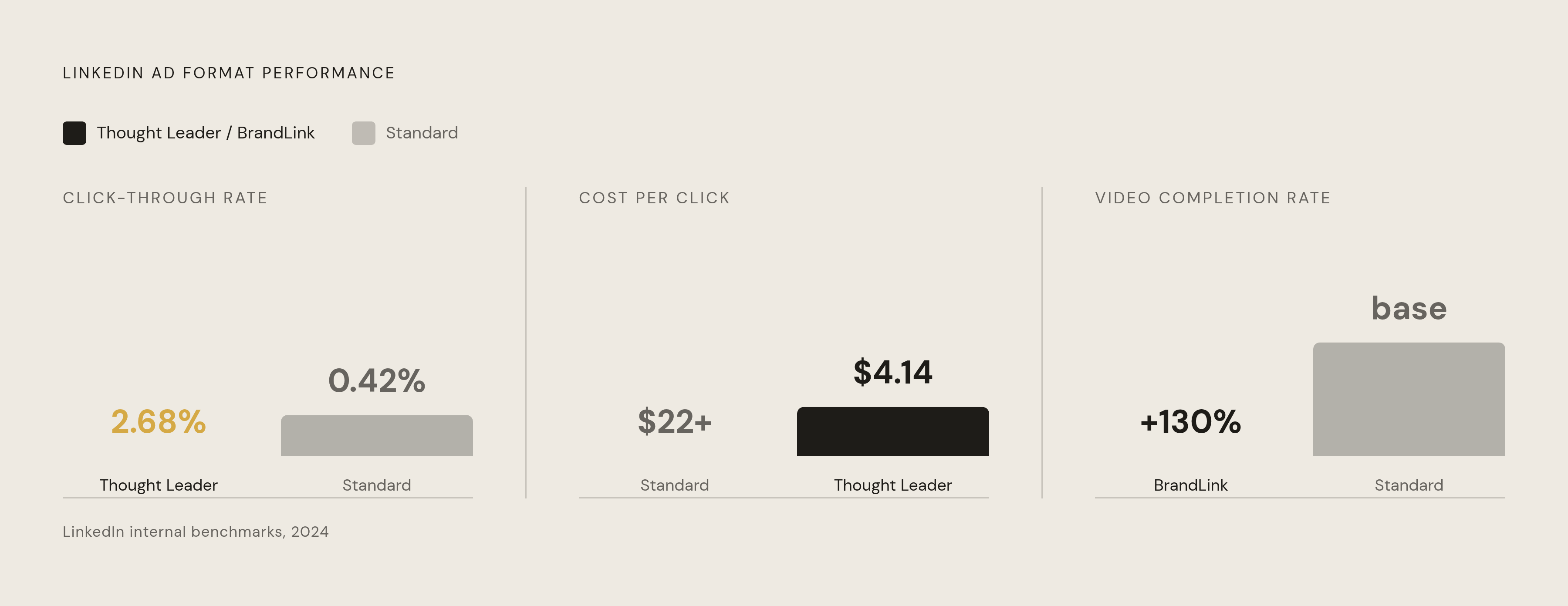
Layering in paid amplification makes the case stronger. Thought Leader Ads post a 2.68% click-through rate against 0.42% for a standard single-image ad, a gap that's hard to argue with. Cost-per-click runs as low as $4.14, compared to $22 or more for a standard brand campaign. CTR climbs from around 3.9% in week one to over 8% by weeks 10 through 12, and doesn't meaningfully drop off until week 19, which should change how often teams touch their creative. Most media plans call for rotating creative every four to six weeks. On this channel, that habit pulls the ad right as it's hitting stride.
Video tells a similar story. BrandLink delivers 130% higher average completion rates than standard in-feed video, and members exposed to a BrandLink campaign are up to 18% more likely to submit a Lead Gen Form. LinkedIn's own performance data shows BrandLink revenue jumping nearly 200% quarter-over-quarter by Q2 2025.
The cost angle also causes all of it, since LinkedIn's ad inventory carries a real premium because it concentrates decision-makers you can't reach as efficiently anywhere else, while sponsored creator content reaches that same audience for a fraction. LinkedIn's ad inventory carries a real premium because it concentrates decision-makers you can't reach as efficiently anywhere else. Sponsored creator content reaches that same audience for a fraction of the equivalent CPM, because the creator's own credibility is doing work an ad unit can't buy.
Structuring a creator roster before adding headcount
Follower count is the wrong first filter. A creator with a modest following who are all decision-makers at mid-market SaaS companies will outperform a creator with 200,000 generalist followers, every time, for a B2B offer. That's why nano and micro-influencers now make up over half of campaign volume: they carry higher engagement with audiences that actually match the buyer profile.
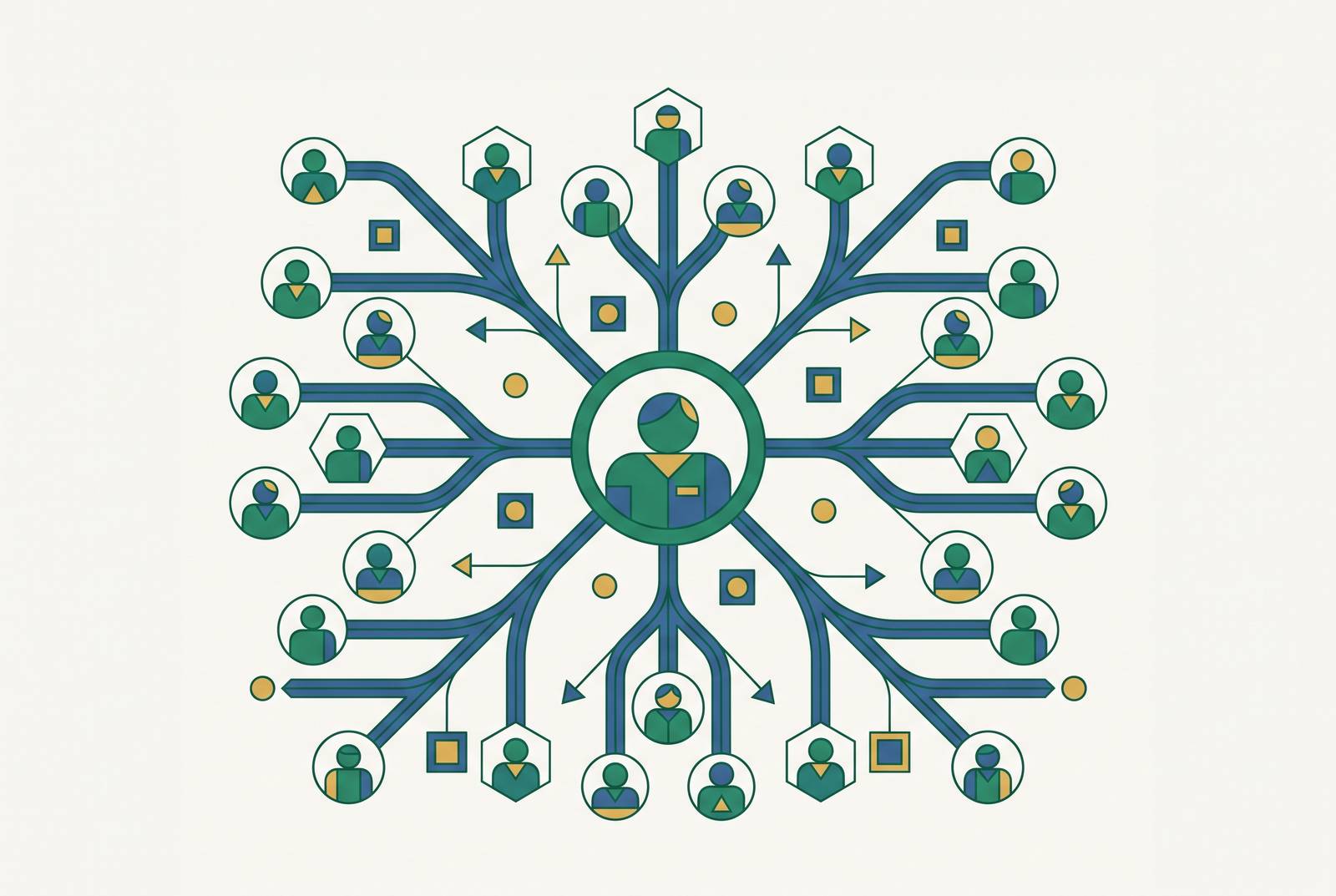
At the pilot stage, this doesn't matter much. Any credible voice in the category can show a team that the channel works. At program stage, it matters completely, because each creator now needs a defined job inside the system rather than just a good vibe and a decent post history. Think of the roster in terms of function:
Top-of-funnel education. Reaches buyers who don't yet know they have the problem, explains the category from scratch. Mid-funnel proof. Reaches people actively evaluating, covers use cases, walks through comparisons. Executive audience access. Gets in front of the economic buyer or the C-suite stakeholder who never engages with top-of-funnel content. Customer validation. Peer-to-peer credibility that de-risks a late-stage deal. Event and community presence. Keeps the brand visible across live touchpoints and the async conversation that follows them.
A roster with five creators all doing top-of-funnel education has a gap, no matter how good each individual post performs.
Vetting each candidate takes more than scrolling their feed. Pull a sample of their followers and engagers and check for job function, seniority, industry, and how close they actually sit to a buying decision. Compare that against whatever demographics the creator's media kit claims, because self-reported numbers and actual audience composition don't always match. Look for someone with a specific, defensible point of view on a narrow topic. Generalists are murder to brief once volume goes up, because there's no throughline to anchor the message to.
Consistency affects how a creator performs across a sales cycle that regularly runs past two months in B2B, more than any single post's engagement number does. A creator who posts sporadically but occasionally goes viral is a worse bet than one who shows up every week with steady, on-topic content. Can this person publish something buyers will believe, legal will approve, and sales will actually use in a deal? If the answer's no on any of those three, the roster slot isn't filled yet.
LinkedIn's Creator Marketplace helps with discovery here. Eligible creators opt in, show up to 8 posts or their most recent work, and list how they want to be contacted, including through an agent or representative. Creators keep control over whether a brand can boost their content through Thought Leader Ads, they can approve or deny that request. The Marketplace doesn't process payments or take a cut, fees get negotiated directly between brand and creator. It's currently English-only, and it pairs with Thought Leader Ads. Teams assuming broad access to BrandWorks, the managed-service tier that encompasses Top Voices 360, should know that's limited to select managed accounts, not something every team can plug into.
How do you build a briefing system that still works when you scale past ten creators?
At two creators, a brief is often a five-minute call and a Slack message with a few bullet points. Tacit knowledge fills whatever's missing, because there's a real relationship doing the work. At ten creators, that same looseness produces ten different interpretations of the same campaign, and inconsistent content makes attribution and comparison nearly impossible. Bad briefs are a leading reason content comes back off-brand, which triggers revision rounds, which burns days, which quietly wears down a creator's willingness to work with a brand again.
A brief that actually scales needs to nail down a specific list of things, every time, without exception:
- A campaign objective tied to a real funnel stage (awareness, consideration, conversion), not just "promote the product" Attribution has to start at outreach, not at publication.
- Any exclusivity window within a competitive category
- Content ownership and licensing terms, spelled out in writing
- Whether the brand plans to boost the post through Thought Leader Ads
A brief isn't a one-way order form, either. Creators who push back on copy that reads like an ad are the ones to work with, and that pushback is a good sign, not a problem. Their voice and their point of view are the reason their audience trusts them. A brief that leaves zero room for that voice produces content that reads like it came from the brand, which defeats the entire premise of working with a creator instead of just buying a media placement.
AI-assisted brief generation is showing up in more of these workflows now, mainly because it cuts the time between campaign planning and creator outreach. The goal there is narrow: strip out the operational drag that causes programs to stall at scale, not to hand the creative relationship over to a template.
Contract structures and compensation models that scale without friction
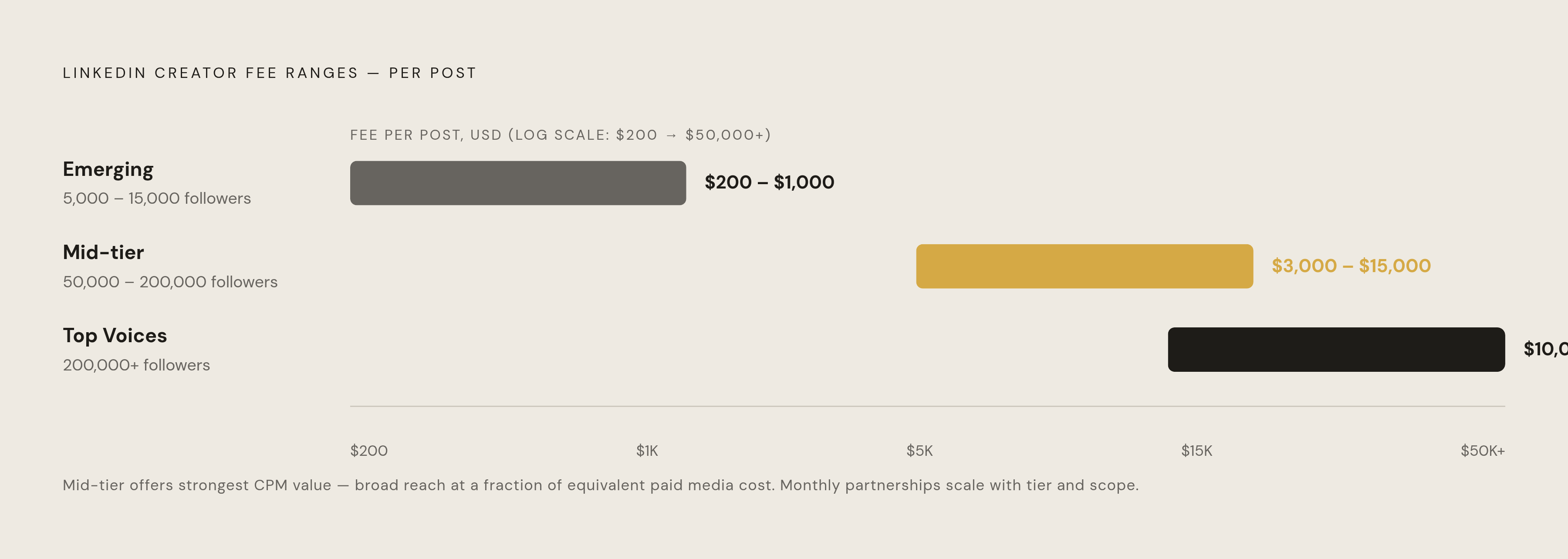
Rates on LinkedIn span a wide range, and the roster function should drive where a creator lands on it, not just their follower count.
- Emerging creators, roughly 5,000 to 15,000 followers: $200 to $1,000 per post
- Established mid-tier creators: $3,000 to $15,000
- Top LinkedIn voices with 200,000-plus followers: $10,000 to $50,000-plus
- Newsletter sponsorships: rates vary widely by audience size and engagement
- Ongoing monthly partnerships with multiple deliverables: pricing scales with creator tier and scope
Mid-tier thought leaders command rates that remain a fraction of what the equivalent reach costs through LinkedIn's paid CPM.
A few things reliably move the price up, and negotiations should account for them upfront rather than discovering them mid-contract. Exclusivity clauses add a meaningful premium on top of the base rate. Whitelisting or amplification rights through Thought Leader Ads add another layer of premium. Bundling formats, a post plus a newsletter mention plus a short video, should get priced as one package, not stacked line items that inflate the total without anyone noticing. Performance guarantees sit outside all of this and deserve their own negotiation.
Flat fees are giving ground to structures that tie pay to actual pipeline movement. The standard shape now runs three tiers: a base retainer for producing the content, a performance layer tied to engagement quality (qualified clicks, time on site, newsletter signups pulled from tagged UTMs), and a backend bonus that triggers once the content generates a qualified lead. Programs built on this model use a base production fee, a middle tier tied to verified traffic quality, and a top payout only when the content drives real pipeline.
This structure does something useful beyond just aligning incentives. It filters the roster. A creator who resists a performance component is telling a brand something about how confident they are in their own audience's buying power, and that's worth listening to.
Payment timing matters just as much as the amount. The market's settling around 50% on contract execution and 50% within 15 days of the content going live, tied to delivery rather than paid entirely upfront. That protects a brand running ten creators at once from non-delivery risk, and it protects the creator from being ghosted after posting. Delayed or manual payouts are one of the fastest ways to lose a good creator's attention. A creator who has to chase an invoice for six weeks starts deprioritizing that brand's next campaign, and nobody sends a strongly worded email about it, they just quietly stop responding to the outreach. Automated payout systems remove that friction entirely, and at ten-plus creators running simultaneously, that friction is enough on its own to break a program nobody meant to break.