B2B Creator Contract Essentials for LinkedIn Campaigns
Protect your B2B creator deals with contracts that account for long buyer journeys.

A LinkedIn creator contract is what turns a sponsored post into a repeatable channel instead of a one-time favor. Per the LinkedIn-Ipsos B2B Marketing Benchmark, 55% of B2B marketers already use influencer or creator marketing on LinkedIn, and another 29% plan to start within the year. LinkedIn creator investment grew 171% year over year, with 61% of B2B marketing leaders planning to spend more. When budgets move that fast, the informal payment-and-messaging arrangement that worked for one creator falls apart the moment a team runs three campaigns at once and tries to measure what actually drove pipeline.
What a LinkedIn creator contract is doing (and how it differs from B2C influencer agreements)
B2C influencer deals are mostly about reach and brand safety. A post looks good, doesn't embarrass anyone, and the deliverable ends there. B2B contracts on LinkedIn carry more weight, because the content has to move someone toward a buying decision, not just get seen.
The audience is small and professional, which changes the stakes. A vague disclosure or an overstated claim doesn't just look sloppy, it lands directly in front of the decision-makers a brand is trying to win over. And because that audience is small, attribution has to be built in from the start: UTM parameters, trackable links, CRM tagging, all agreed before the post goes live, not bolted on after someone asks for a report.
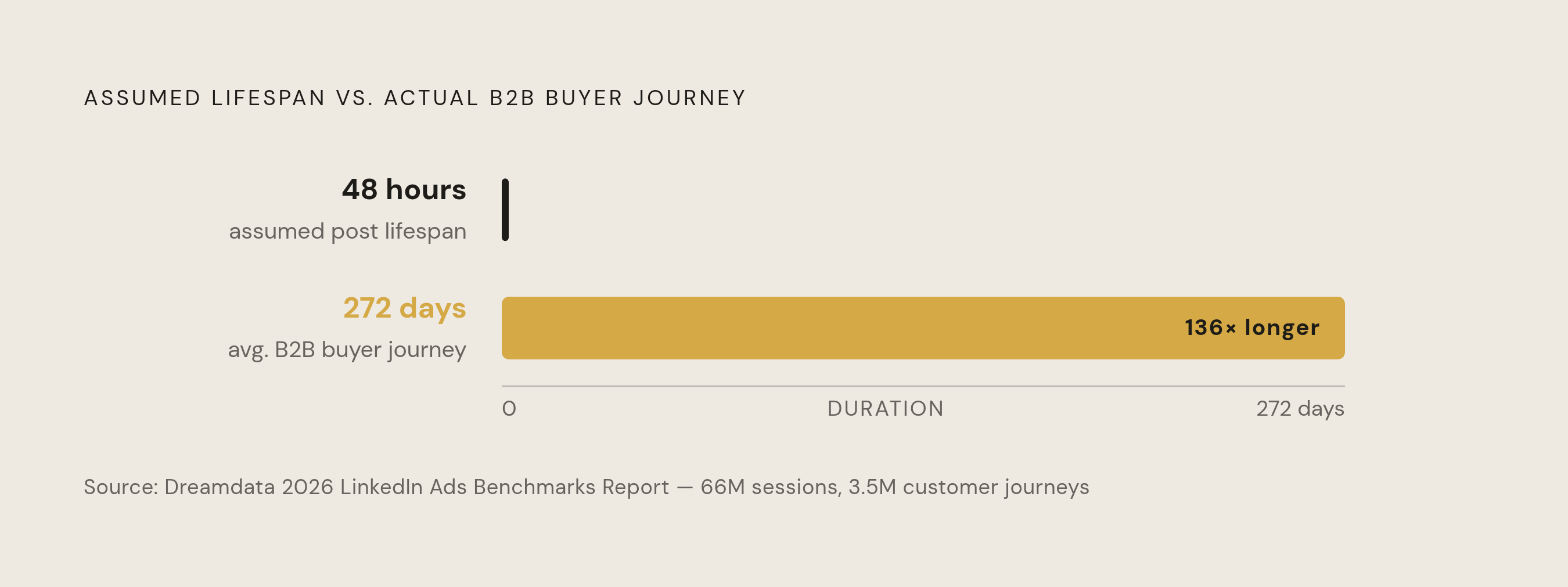
The Dreamdata 2026 LinkedIn Ads Benchmarks Report, built on more than 66 million sessions and over 3.5 million B2B customer journeys, puts the average B2B buyer journey at 272 days. A contract written like the post disappears after 48 hours ignores what actually happens: that content gets revisited, screenshotted, and repurposed across a nine-month decision window. Every clause should assume the content has a long life, not a single publish date.
LinkedIn's Creator Marketplace, which launched June 10, 2026, connects brands with creators for discovery, but the fees, payment terms, and deliverables get worked out directly between the two parties. The platform doesn't touch the contract itself.
Defining deliverables precisely enough that both sides agree on what "done" means
The contract says "one LinkedIn post."" The brand pictures a 500-word carousel with a trackable CTA. The creator delivers a 60-word text post with a tag. Technically, both sides did what the contract said. Technically, both sides did what the contract said, and that mismatch between a 500-word carousel the brand pictured and the 60-word text post the creator delivered is the problem.
A deliverables clause built for LinkedIn needs to nail down:
- Format. Text post, single image, carousel (and how many slides), a document/PDF post, a LinkedIn article, a Live session, or a Newsletter mention. Each performs differently, and format should match what the campaign is trying to do. Format choices shape how content performs for lead capture on LinkedIn, and screenshot-heavy, text-forward posts from credible operators often convert better than polished video. That's a pipeline decision, so it belongs in the contract, not left to the creator's default style.
- Length. Minimum word count or slide count, spelled out.
- Required elements. CTA language, where the trackable link goes, how the brand gets mentioned (direct name-drop versus a softer reference), and whether the disclosure tag needs to sit at the top or can live mid-post.
- Approval window. How many days the brand has to review a draft, how many revision rounds are included, and what happens if the creator blows past the revision deadline.
- Publication timing. A specific date and time, or a range that requires sign-off before it goes live.
- Minimum post lifetime. How long the post has to stay up and unedited. Creators can delete or edit LinkedIn posts after the fact, so this needs a floor.
For always-on programs, and TopRank Marketing research finds nearly 3 out of 5 B2B marketing teams run one, the deliverables clause should describe a cadence, like posts per month or themes per quarter, rather than a single item. Same format specs, applied on repeat.
One practical fix: attach a creative brief as an exhibit instead of stuffing every content guideline into the contract body. The contract says what has to get delivered. The brief says how it should sound and look.
Exclusivity: how much competitive protection you need, and how to scope it fairly
Brands want protection from a creator turning around and endorsing a direct competitor the following week. Creators, meanwhile, build their income across multiple brand relationships and push back hard on anything that limits that. Both positions are reasonable, and the contract has to split the difference.
B2B sharpens this tension. A creator with 15,000 followers in revenue operations, DevSecOps, or supply chain finance has a small but expensive audience. If that creator promotes a rival product two weeks after your campaign, the same buyers see both posts in their feed. The audience fit that made the creator worth hiring is the same thing that makes them valuable to a competitor.
A workable exclusivity clause defines:
Protect a category such as "sales engagement software" or "B2B data providers," not a named list of three competitors. Categories shift, and a named list gets gamed the moment a new player enters.
- Duration. Windows for B2B LinkedIn campaigns usually run a few weeks before publication to a few weeks after. Longer windows need to come with higher pay, and the length should track the length of the campaign, not a lawyer's instinct toward maximum coverage.
- Platform scope. Does the restriction apply only to LinkedIn, or everywhere? For a campaign anchored on LinkedIn, restricting other platforms usually isn't worth the friction it creates.
- Upfront disclosure. The brand should tell the creator which categories it considers off-limits before signing, not after. Surprises here burn trust fast.
Avoid the blanket clause that bars a creator from mentioning any brand in any category for 90 days. Nobody enforces those in practice, they sour the relationship immediately, and they signal that the brand hasn't spent five minutes understanding how professional creators actually operate. Scope the restriction to the real risk, competitive content reaching the same buyers in the same window, not to whatever the broadest possible draft would allow.
FTC disclosure requirements and how LinkedIn's own policies interact with them
Disclosure belongs in the contract, not just the creative brief, because if a post goes live without it, some of the legal exposure lands on the brand. The contract is the paper trail showing the brand required compliance.
The FTC requires a clear, conspicuous disclosure of any material connection between creator and brand. "Conspicuous" means a reader sees it before they engage with the endorsement, which on LinkedIn means near the top of the post, not buried in the last line or hidden behind "see more." Acceptable language includes explicit in-post phrases like "#ad," "#sponsored," or "Paid partnership with [Brand]." Vague tags like "#collab" or "#partner" don't cut it on their own, and even "#ad" or "#sponsored" alone can fall short if they're easy to miss or don't name the sponsor.
LinkedIn's own Brand Partnership label satisfies the platform's rules, but that's a separate question from FTC compliance. The contract should require both: the platform label and explicit language in the post copy.
The disclosure clause itself should spell out:
- Exact wording the creator has to use, or a short list of approved options Research finds a significant share of B2B buyers rank a named expert or analyst endorsement as their single most trusted signal. An unverified claim from that same voice does real damage.
- What happens if a post goes live without proper disclosure: a correction deadline, the brand's right to demand it come down, and an indemnification clause
Brief the creator on disclosure rules before the contract gets signed, not after. Creators blindsided by disclosure requirements at the draft stage tend to produce weaker content, and some walk away from the campaign.
Content rights and repurposing: getting the permissions your B2B program needs
A creator post that draws real comment threads is evidence of actual market interest. That kind of content deserves a second life in sales outreach, paid ads, and landing pages. It shouldn't just sit in one feed and disappear.
The failure mode here is common: a brand assumes it can drop the creator's post into a LinkedIn Document Ad or a Thought Leader Ad, or paste it into a sales email sequence, then finds out the creator owns the content and never granted those rights.
The contract needs to name each right separately:
- Organic resharing on the brand's own LinkedIn page This needs the creator's explicit opt-in, both in the contract and inside LinkedIn's ad platform itself. A general content license does not cover this automatically.
- Whitelisting or dark posts, where paid creative uses the creator's name, likeness, or content but runs from the brand's account
- Embedding in owned assets: landing pages, case studies, email sequences, sales decks
- Future use, like quoting the post in a blog, a report, or a later campaign
Attach a duration to each right, whether that's in perpetuity, 12 months, or just the campaign window. And check moral rights: in a lot of jurisdictions, creators keep certain rights to attribution even after licensing away commercial use, so the contract should say whether and how the brand credits the creator when it reuses the work.
List each grant separately, with its own duration and platform scope. A single catch-all "full license to all content" clause is both too broad and too shaky to hold up if challenged. And rights cost money: broader usage should come with a higher fee. A contract that tries to grab unlimited rights at a single-post rate either stalls in negotiation or produces a creator who feels shortchanged, which shows up in the work.
Payment terms, milestone structures, and the mechanics that keep campaigns moving
Marketing teams often route creator payments through the same procurement process built for vendor invoices, the kind that takes 45 days to clear. Creators expect payment within days of a post going live. That mismatch alone kills more creator relationships than any dispute over content ever will.
Common structures include:
- Flat fee per deliverable. Simplest to run, easiest for a creator to size up. Fits a one-off sponsored post.
- Milestone-based. Part paid at signing or brief approval, the rest on publication. Keeps both sides honest and aligned.
- Retainer. A monthly rate for an agreed cadence, built for always-on programs. The contract needs to say what triggers payment, whether that's the deliverable landing, the post going live, or just the calendar date, and what happens if the creator falls short in a given month.
- Performance bonus. A base fee plus extra tied to a measurable result, like clicks past a threshold or demo requests generated. This only works if the attribution setup is live before the campaign starts, not built after the fact to justify a number.
The payment clause itself should nail down currency, payment method, what triggers an invoice, the payment timeline (net 15, net 30, whatever the finance team can actually hit), late payment consequences, and tax paperwork like a W-9 for US creators. Missing tax documentation is a small thing that delays payment for weeks and creates its own compliance headache. If the brand cancels after the creator has started work, the contract should say what portion still gets paid as a kill fee.
Processing payments by hand across a roster of creators, each with different rates, different payment methods, different tax situations, is one of the biggest reasons B2B creator programs stall out at two or three partnerships instead of scaling to twenty. Building the contract with automation in mind from the start avoids that ceiling. Some brands moving toward scale route payment through a creator marketplace platform with built-in payout infrastructure, which takes the bottleneck off the brand's own finance team.
Performance expectations and attribution: the clauses that turn a creator campaign into a measurable channel
Most creator contracts describe what gets published and stop there. They say nothing about how results get measured or what the creator needs to do to make that measurement possible. That turns attribution into an afterthought instead of something designed into the campaign from day one.
For a contract to support real measurement, it should require the creator to use the exact trackable link or UTM parameter the brand provides, place it where the brand specifies (not swapped for a shortened link of the creator's own choosing), and leave it untouched for the agreed post lifetime. It should also set expectations around timing, since a post that goes live without warning breaks any coordinated push through paid amplification or sales outreach that was timed around it.
None of this works retroactively. A brand that tries to add tracking requirements after a campaign has already run has no leverage to enforce it and no clean data to show for the spend. The attribution clause has to sit in the contract before anyone hits publish, right alongside deliverables, rights, and payment. A creator program that produces a story to tell is not the same as one that produces a number to point to.