Sourcing LinkedIn Creators in AI, Sales, and Founder Communities
Different creator types earn trust differently in AI, sales, and founder niches.
55% of B2B marketers already run creator or influencer programs on LinkedIn, and another 29% plan to start within the year. That's according to LinkedIn-Ipsos 2025 data, and it settles the question of whether creator sourcing matters. What's not settled is how to do it well. Creator numbers on LinkedIn roughly doubled between 2021 and 2025, and most marketers are still filtering by follower count, treating AI, sales, and founder creators like one interchangeable pool. They aren't. Each community has its own authority signals, its own content habits, and its own audience makeup, and a sourcing method that works for one falls flat in another.
What makes a LinkedIn creator credible versus merely visible
The most useful creators on LinkedIn right now aren't full-time influencers. They're working practitioners, founders, VPs, senior individual contributors, who write about their actual jobs in public. Call this the operator-creator tier. Their follower counts look small next to a consumer influencer, but the audience is concentrated exactly where a B2B brand needs it.
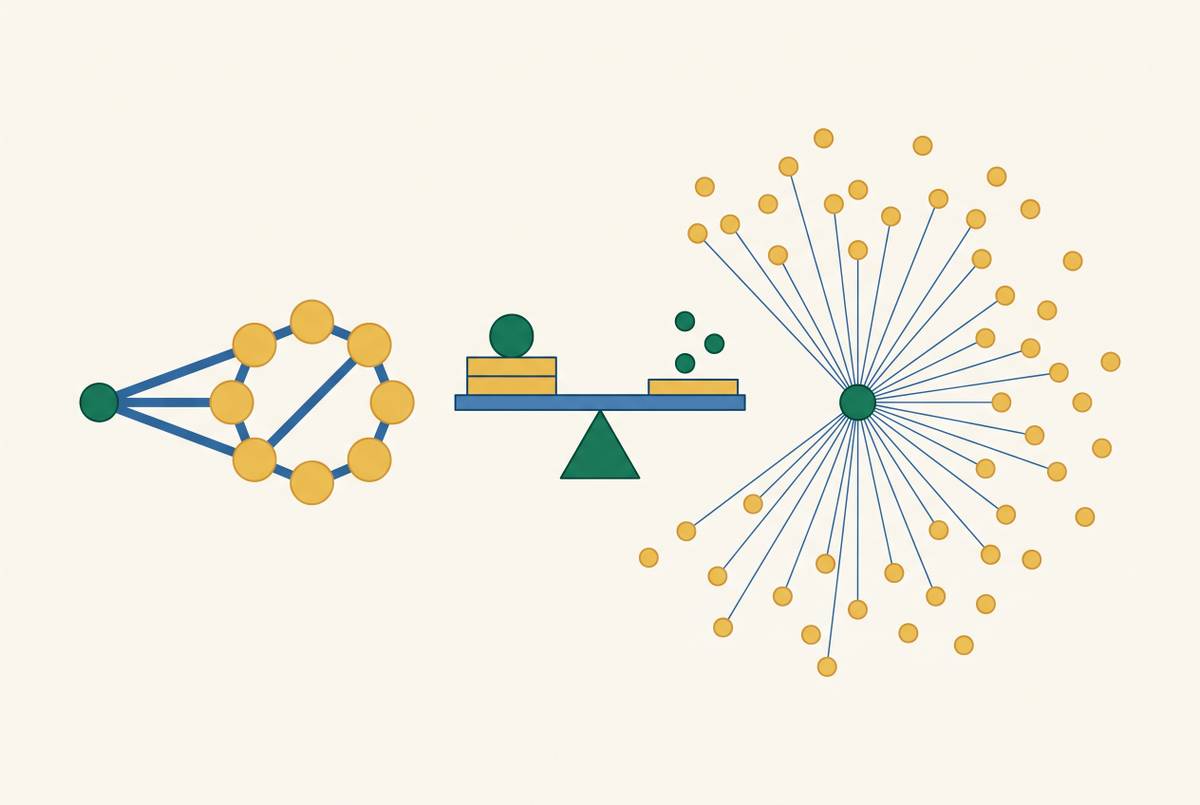
Run the math on this. A RevOps creator with 4,000 followers and a 7% engagement rate produces about 280 engaged readers per post, and nearly all of them carry the job title a buyer is targeting. A generalist with 30,000 followers at 0.8% engagement produces roughly 240 engaged readers, scattered across every industry under the sun. Same rough output, wildly different value, because one audience is dense with buyers and the other is just noise wearing a bigger number.
There's a trust mechanism underneath this that's worth naming directly. Per LinkedIn-Ipsos 2025, expert endorsements are 1.7 times more likely than a company's own content to give a brand an edge over a competitor. Being named a top solution by an analyst or industry expert was the single most influential trust signal for 37.9% of B2B buyers surveyed. Buyers trust people who don't work for the vendor, and they trust them more than the vendor's own marketing team.
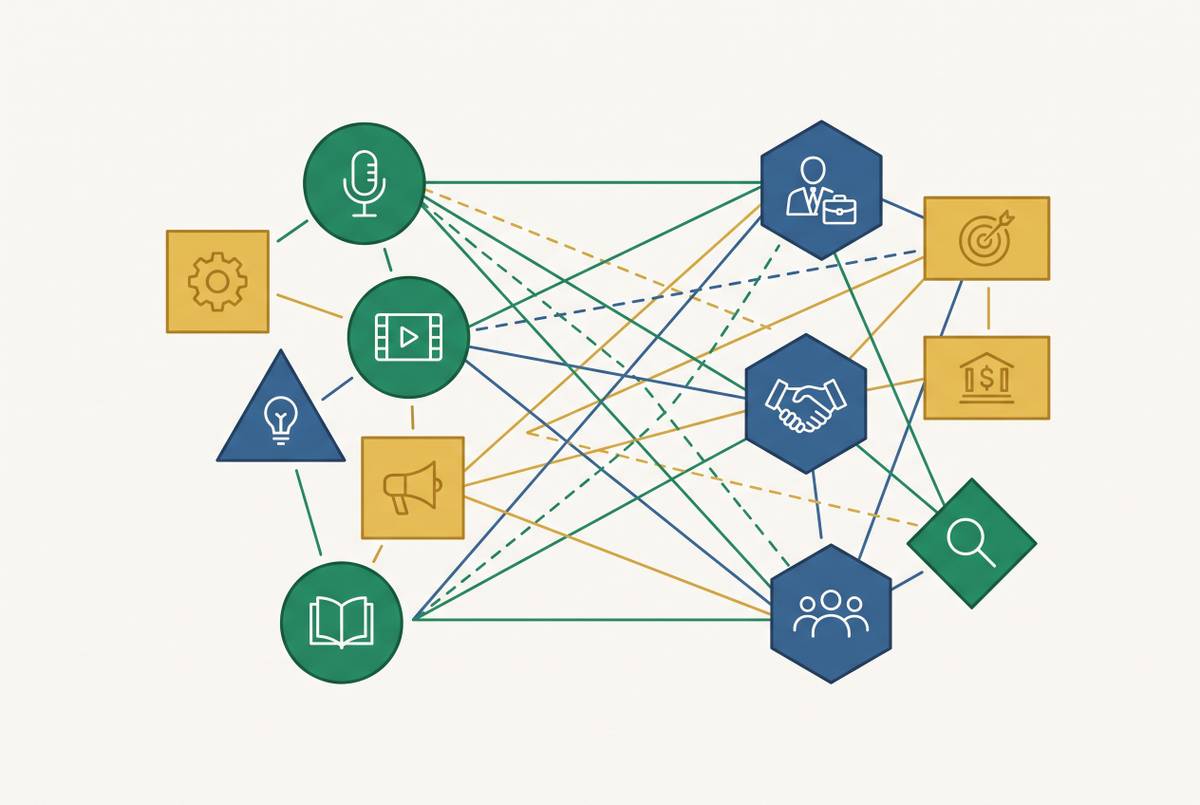
Four creator types show up in this landscape, and each earns its keep differently:
- Thought leaders and analysts sit at the highest-trust tier. They're slow to activate and most powerful late, at final vendor evaluation. Rated most effective by a notable share of B2B marketers.
- Customer influencers are existing buyers who happen to have a following. They're inherently credible and easy to activate through co-marketing, and a significant minority of marketers rate them second most effective.
- Independent practitioners, the operator-creator tier, are the most cost-efficient option for an ongoing program. This is where most sourcing effort should go.
- Internal executives, founders and C-suite who post consistently under their own name, generate far more engagement from personal profiles than any brand page manages.
Dinda Anandita, Account Director at Content Collision, put the risk plainly in ContentGrip's playbook: the moment a brand over-scripts a creator, it loses the thing that made that creator worth hiring in the first place. AI has a role here, but it's a narrow one. Use it to cluster a large creator set by subject area and flag the engagement-bait accounts. Final selection still needs a human reading actual posts and asking whether this person could hold their own in a serious buying conversation.
Where AI community creators live on LinkedIn and how to evaluate them
Favikon's analysis of companies running LinkedIn creator campaigns found that nearly a third were AI-first companies, and that's not an accident. Most AI buyers don't know they have the problem yet. Search advertising can't reach someone who isn't searching. A trusted creator explaining the problem, in plain terms, does work no ad campaign touches.
Finding the right voices here means looking in a few specific places. Practitioners currently in or recently out of applied AI roles, ML engineers, AI product managers, heads of AI at SaaS companies, tend to write about implementation tradeoffs rather than trend commentary. Researcher-practitioners translate model-layer or academic shifts into what it actually means for a business. And a category that's easy to miss: RevOps, growth, and sales leaders who write about folding AI tools into their own workflow. Buyers who are also operators often trust these voices more than anyone with "AI" in the job title.
LinkedIn's Creator Marketplace, launched June 10, 2026 and currently in alpha (rolling out first in the US and Canada, English-language content only, accessible through Campaign Manager under "Content and Assets"), now lets advertisers filter by topic and content expertise. AI is one of the platform's active niches there.
A few things separate a real signal from noise in this niche specifically:
- Recency counts for more here than almost anywhere else. A creator whose sharpest AI post is six months old is probably already behind the current conversation.
- Look at who's replying, not how many. Comments from practitioners arguing over specifics beat a wall of "great post" every time.
- Watch for the trend-narrator, someone who aggregates AI news without applying it to any specific professional context. High impressions, low influence on an actual buying committee.
- 6sense found that 94% of B2B buyers used an LLM somewhere in their buying journey in 2025. Credible AI practitioners posting consistently on LinkedIn shape the raw material those models draw from, which makes steady, substantive posting worth more than it looks on the surface.
BrandLink, renamed in May 2025 from the earlier Wire Program, includes AI-adjacent names like Allie K. Miller and Bernard Marr. Treat that roster as a reference point for what LinkedIn itself considers a credible AI voice, not a shopping list. Most useful sourcing in this niche happens below BrandLink's top tier, in the operator-creator range.
Where sales and GTM creators live and the signals that separate practitioners from noise
The GTM creator landscape is crowded, but the good stuff isn't spread evenly. The voices worth paying for are practitioners with live pipeline responsibility right now, not coaches who left quota-carrying roles years back.
Community membership doubles as a sourcing map here. Pavilion, a membership community for revenue leaders, gives members who post publicly a kind of implicit peer credibility, since they've already been vetted into a curated professional group. RevGenius serves a similar function for GTM practitioners more broadly, and it's a strong source for RevOps, ABM, and pipeline-generation voices specifically. Watch for recurring themes that show a creator's audience is actually paying attention: ICP targeting, pipeline generation, sales team building, ABM, product-led growth, RevOps alignment, AI-driven GTM strategy.
A handful of checks separate the real thing from a well-dressed newsletter:
- Do other practitioners argue with the creator in the comments, or just applaud? Debate is the stronger B2B signal.
- Specific numbers, frameworks, or decisions from the creator's own work beat generalized advice every time. Generic advice is a yellow flag.
- Job title and current role matter. A sitting VP of Sales at a mid-market SaaS company carries a different kind of weight than a sales trainer whose last quota was several years ago.
- Niche beats scale. Micro creators in the 10,000 to 100,000 follower range charge hundreds to several thousand dollars per post depending on specialty, and practitioners writing about SaaS operations, RevOps, or enterprise procurement sit at the top of that range.
Tech and SaaS, management consulting, and enterprise software brands get the most out of LinkedIn creator campaigns in this community, mostly because the audience here is professionally verifiable in a way that justifies paying a premium over other platforms. When using LinkedIn's Creator Marketplace to source GTM voices, filter by audience job title and industry match first. Follower count comes later. Comment-level discussion beating raw like counts is the tell that a creator's audience is actually paying attention.
Where founder community creators live and why the category requires different sourcing logic
Founders posting from a personal account outperform company pages by a wide margin, roughly 315% more engagement, because people trust people and not logos. A 2024 Edelman-LinkedIn report found that 73% of B2B decision-makers see thought-leadership content as a more trustworthy basis for judging a company than its own marketing materials.
There are two distinct sourcing jobs in this community, and they don't blend into one process. One is finding external founder voices whose audience already overlaps with a target buyer, founders in adjacent categories talking to the same ICP a brand sells into. The other is activating a founder inside the company itself, treating that founder as a media asset the whole team compounds behind: publishing, teaching, taking public positions, generating inbound as a result.
Founder creators tend to cluster into a few recognizable patterns. Builders who write about company-building decisions, hiring, pricing, distribution, product direction, tend to draw an audience of other founders and operators. Technical founders in AI, SaaS, and developer tools who document architecture and product choices pull in engineering leaders and technical buyers specifically. GTM-focused founders sharing growth experiments and revenue milestones concentrate exactly the buyer type a SaaS brand wants in the room.
Evaluating a founder creator means looking past the polish:
- Consistency matters more here than in any other niche covered so far. A founder posting week after week builds the familiarity that shortens a buyer's hesitation. One who posts in bursts and goes quiet for months is a weaker bet, regardless of follower count.
- Check whether the audience is mostly other founders (a peer audience) or includes the buyer layer one level down, the actual ICP. The latter is what turns a sponsorship into pipeline.
- The strongest AI-startup founders tend to pair their own credibility with case studies and outside advisors backing them up. Favor founders who amplify third-party proof over ones running a purely self-referential feed.
A practical process for moving from a longlist to a shortlist across all three communities
Step 1, define before searching. Write down the exact job titles, company sizes, sectors, and locations the ICP holds, before opening a single discovery tool. The sharper that definition, the more an audience-fit filter can actually do for you later.
Step 2, use platform tools as a first filter, not a final verdict. LinkedIn's Creator Marketplace (June 2026, US and Canada, through Campaign Manager under "Content and Assets") lets a marketer search by topic, expertise, and audience fit, and surfaces creators available for paid amplification. Community-based sourcing works alongside this: scan active posters in Pavilion, RevGenius, and relevant Slack or Discord groups for GTM and founder searches specifically. Hashtag and keyword search on LinkedIn itself helps surface who's actually generating discussion on a topic, not just posting about it.
Step 3, apply AI for pattern recognition across the longlist. Cluster by subject area, flag the engagement-bait accounts, surface who over-indexes on comment-level debate versus passive likes. AI handles the volume. A strategist still has to make the judgment call.
Step 4, manually audit whoever makes the shortlist. Read at least 10 recent posts, not just the profile summary. Check the comments: are practitioners debating specifics, or is it surface-level applause? Verify audience job title and industry composition against marketplace filters before reaching out. Confirm posting consistency, since frequency and recency both signal whether an audience is still actively paying attention.
Step 5, score on content quality, engagement rate, and ICP audience fit. Follower count comes last, not first.
Platforms offering vetted B2B creator marketplaces, with audience-fit filters, campaign management, and attribution baked in, compress steps 2 through 4 considerably for teams running multiple niche programs at once. Naano, for instance, is a B2B LinkedIn creator marketplace built specifically to match companies with creators whose audiences align to their ICP.
What audience fit actually means when you try to verify it
Most creators can describe their audience in a sentence or two. Few can hand over a job-title or industry breakdown that lines up precisely with a sponsor's ICP, and that gap is where most sourcing mistakes happen.
Ask for audience analytics screenshots showing top job titles, industries, seniority levels, and geography, then compare those directly against the ICP definition written down in step 1. Ask for post-level analytics on recent sponsored or high-performing posts too: click-through rate, the job titles of commenters (often visible right in the thread), and save rate as a rough proxy for how many decision-makers actually engaged. For creators enrolled in LinkedIn's Creator Marketplace, some of this audience data is available before outreach even starts.
Engagement rate is a useful proxy, but it comes with a catch. A 2026 ConnectSafely analysis found carousel posts hit the highest average engagement rate on LinkedIn at 6.60%, 303% higher than image posts and 596% higher than text-only posts. A creator who leans heavily on one format over another will show a different headline engagement number for reasons that have nothing to do with audience quality. Look at engagement rate by format, not as one blended figure, so a creator doesn't get penalized for using a lower-engagement format for good reason.
Newsletter data is an underused signal worth checking. LinkedIn newsletters commonly see open rates of 30 to 50%, compared to 20 to 25% for average email platforms. A creator running a substantive newsletter has already proven readers stick around past the scroll. Ask for subscriber role and industry data if a newsletter exists.
A few patterns should raise a flag no matter how clean the surface metrics look:
- High follower count paired with engagement that's mostly generic reactions, not comments from identifiable practitioners.
- Comment threads full of other creators talking shop with each other, rather than actual buyers from the target vertical.
- A posting history that jumps between unrelated topics. Audience loyalty built around one subject rarely carries over to the next.
How creator rates vary across these three communities and what that means for budget allocation
LinkedIn creator rates in 2026 run well above other platforms on a per-follower basis. ContentGrip's synthesis puts LinkedIn rates at roughly 2 to 5 times what Instagram or TikTok command per follower, and the reason isn't mysterious: LinkedIn audiences are professionally verifiable in a way a TikTok following simply isn't.
That premium changes how a budget should get split across the three communities. Sales and GTM creators, especially micro creators in the 10,000 to 100,000 follower range, run $500 to several thousand dollars per post, with SaaS operations and enterprise procurement specialists commanding the high end. AI creators carry a different kind of premium tied to scarcity and recency rather than raw follower count, since the field moves fast enough that yesterday's expert commentary can go stale within weeks. Founder creators often cost less in direct fees but demand a longer-term commitment, since their value compounds through consistency rather than any single sponsored post.
None of this supports spreading a budget evenly across three unrelated pools and hoping for the best. It supports building three separate sourcing processes, each tuned to how that community actually earns trust, and paying rates that reflect audience density rather than audience size.