Founder-Led Content Distribution Strategy on LinkedIn
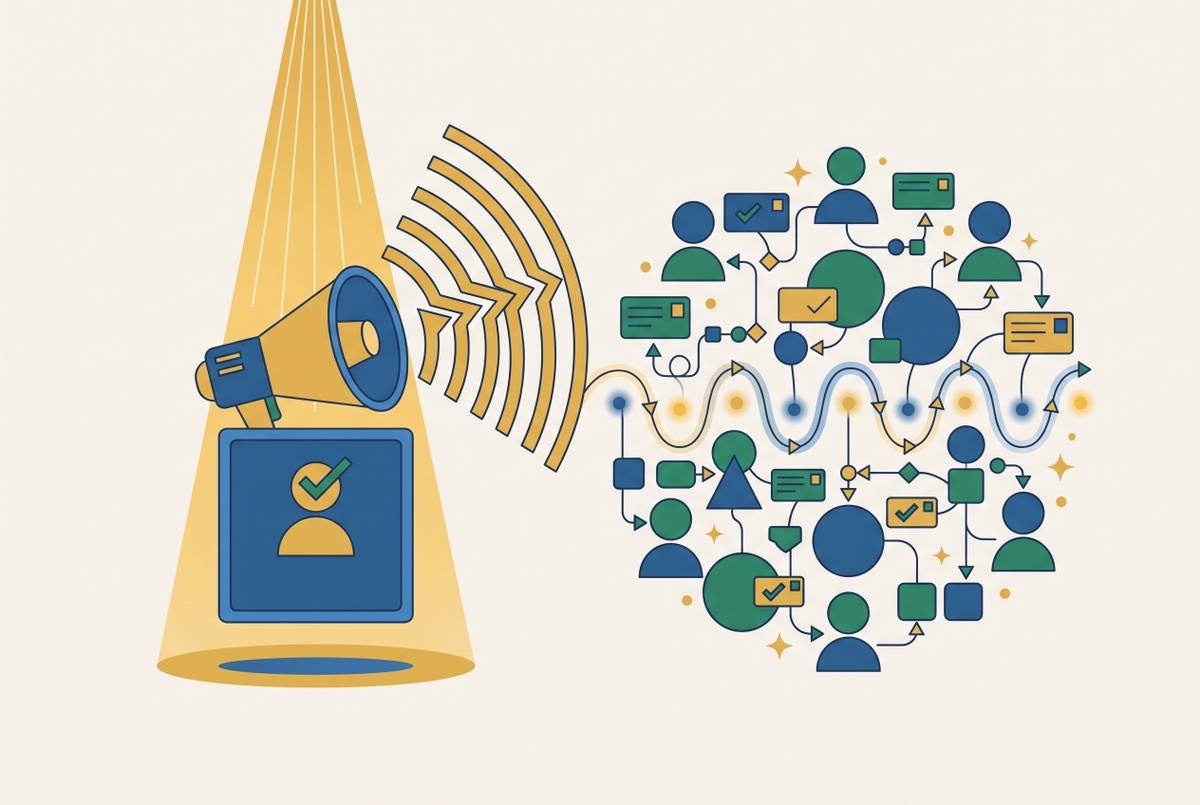
Personal profiles outperform company pages by nearly two-to-one on LinkedIn's algorithm.
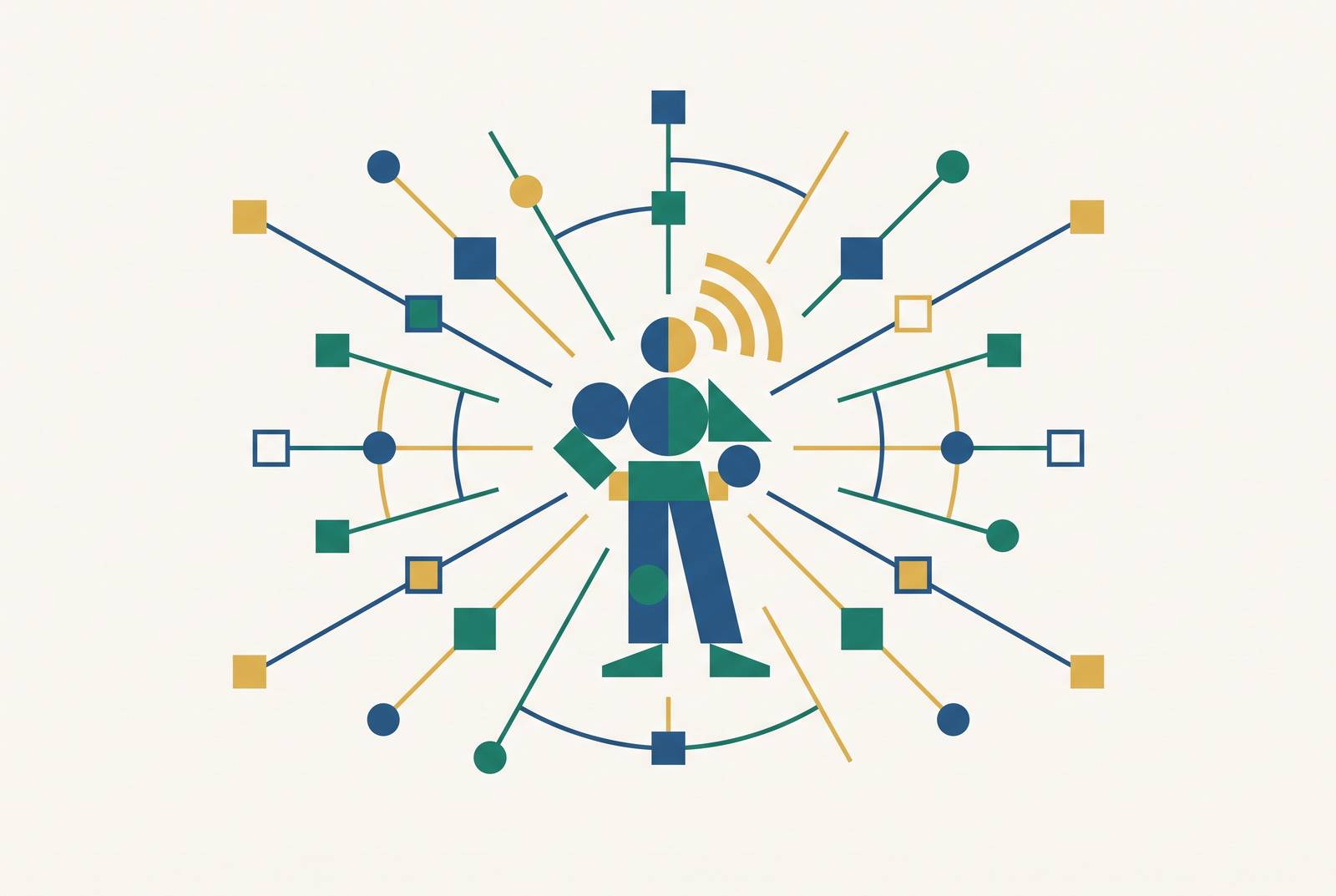
Founder-led content works on LinkedIn for a reason that has nothing to do with charisma or personal branding. The platform distributes personal accounts and processes buyer trust on different terms than it does for company pages, and that gap is built into the mechanics of the feed itself. LinkedIn's 2026 algorithm favors authentic engagement and direct connections between people over corporate broadcasting, so personal profiles pull in far more engagement than company pages do, post for post. A founder's post also carries built-in credentials: role, company, track record, all visible in the same click a reader takes to view the profile. A company page offers none of that context. It just offers a logo.
The research backs this up directly. LinkedIn and Ipsos' Influence Report found that expert endorsements are 1.7 times more likely than brand-authored written content to give a company the edge over a rival. That's not a marginal edge in a crowded field. It means an expert's voice, structurally, beats a brand's voice on this platform almost two to one. The same report found that if analysts or industry experts name a company the top solution, that ranks as the single most influential trust signal among B2B buyers, cited by 37.9% of those surveyed, ahead of both video testimonials and written customer reviews.
Then there's the part of the system that doesn't show up in any dashboard: dark social. Most B2B content sharing happens through private channels, screenshots sent in team chat tools, links passed in direct messages, posts forwarded over email, none of which get counted in a company page's official reach numbers. Founder content travels through those same private channels constantly, so the engagement metrics you see on a founder's profile already understate how far it actually spreads. Company pages don't get that lift at all, because the content people choose to pass along privately tends to come from someone they trust, not an institutional account.
Buyer behavior and founders
Platform mechanics explain half of this. Buyer behavior points in the same direction as platform mechanics. B2B buyers now use founder and creator content on LinkedIn as a research step that happens before any vendor conversation starts, which means a founder's publishing habit is already shaping the pipeline long before sales gets involved. LinkedIn and Ipsos' Influence Report found that 59% of B2B buyers consume creator content on LinkedIn, more than on any other platform they were asked about.
What happens during that research phase shapes buyer opinion well before sales gets involved, which the next sentence shows in the hesitation it quietly resolves. Buyers read founder posts, track who keeps showing up with something useful to say, and quietly form opinions about both the person and the company well before a sales conversation is on the table. By the time a real buying moment arrives, a lot of the hesitation that a cold outbound email would normally have to overcome has already been worked through. Edelman and LinkedIn research found that a large majority of decision-makers say thought leadership content prompted them to research a product or service they hadn't previously considered, and a similarly large share of C-suite executives said it led them to reconsider a vendor relationship they already had in place. That's a founder's LinkedIn post changing who gets a seat at the table during a vendor evaluation.
Pete Gerhardt and Lloyed Lobo are useful illustrations of what consistent founder publishing does over time: both built recognizable reputations on LinkedIn well ahead of any direct sales push, and both saw that reputation translate into inbound interest that sales teams could then work. The pattern matters more than the individuals. Founder content functions as a trust asset that runs ahead of the sales funnel. It pre-qualifies buyers and shortens the distance a sales cycle has to cover once an account actually enters pipeline. By the time attribution tools try to credit a deal to a campaign or a rep's outreach, the real work happened months earlier, in a feed, during a research phase that no CRM field captures.
Founder LinkedIn timelines
Most founders who try LinkedIn and quit don't quit because the content was bad. They quit because they expected results on a timeline the platform was never going to deliver. Founder LinkedIn programs most often die from this mismatch between effort and expected payoff, right before the gains those programs are built to produce start to show up.
The pattern is familiar enough to name directly: a founder commits to LinkedIn, posts heavily for about six weeks, sees no pipeline movement, and stops. What that founder doesn't see is what happens on the other side of the drop-off point. Mature, always-on creator programs show strong ROI at the twelve-month mark, and the strongest long-term payoff, measured as a media multiplier, appears over a two-year horizon. The return arrives late and builds slowly, which is exactly the shape of result that a founder checking for quick wins after six weeks will miss.
The time commitment is also smaller than most founders assume going in. A well-designed program runs on roughly one hour per week of net founder time and produces three to five posts in that window. Founders who quit early are rarely quitting because the workload became unsustainable. The founders who do convert this trust gap into real pipeline aren't the most naturally charismatic writers or the most polished on camera, but the ones who kept posting long enough for LinkedIn's algorithm and a buyer's memory to both start working in their favor at the same time.
Building a publishing cadence a founder can sustain
A cadence that survives past the six-week mark has to be designed, not willed into existence through discipline alone. The founder teams that keep this running long-term have stripped the founder's job down to one thing: showing up with perspective and judgment. Everything else gets handled by someone else.
That one-hour-per-week number isn't a rough guess, it's a working framework. Net founder time produces three to five posts a week, and everything beyond generating the raw material, formatting, scheduling, light editing, repurposing older material into new posts, gets handed to a content operator or a GTM team member. LinkedIn's 2026 algorithm rewards that kind of consistency directly. The platform's 360Brew update shifted the feed from a relationship graph to an interest graph: only 31% of what a user sees now comes from first-degree connections, while 69% comes from interest-graph matching based on topic relevance and how long someone actually reads a post. Connection strength, meaning recent engagement history with a given follower, still plays a role, but it's secondary. Topic authority and dwell time carry the weight now, and both of those build up the more consistently someone publishes.
Weekly posting is the floor here, not a target to hit occasionally. If an account posts consistently, it shows meaningfully stronger follower and engagement growth than one that posts in bursts and goes quiet. The practical way founders sustain that pace without burning out is batching. Founders who keep this up long-term almost all record or draft their raw material in one sitting, once a month or every other month, voice notes, Slack threads, a recorded conversation, and hand it to an operator who turns that raw material into a running queue of posts. That removes the weekly decision of "what do I post today," which is the exact decision point where most founders stall out and quit. The founder's job narrows down to approving drafts that already sound like something they'd say, since the raw material came from their own words.
The cadence should build in one mechanical detail directly: external links. Posts with external links in the body take a real reach penalty under the current algorithm, roughly 60% less reach, and putting the link in the first comment instead doesn't dodge the penalty anymore. That workaround has been patched. The practical rule is simple: post native content first, keep links out of the post body, and treat any link, wherever it's placed, as a reach cost worth paying only when it matters. Across a given week, the mix should vary: a few short structured posts, an occasional longer narrative, and a carousel or document every so often, so the account doesn't lean on one format the algorithm happens to reward this month.
Content formats that amplify reach and content formats that deepen trust
Founder content on LinkedIn does two different jobs, and no single format can do both well. One job is reach: getting a founder's name and perspective in front of people who've never seen it before. The other is trust: giving people who already follow a founder a reason to keep paying attention and eventually act on what they're reading.
Short-form posts do the reach job efficiently. You get clean spacing, one clear point of view, and short lines that keep a reader moving through the argument. Native video adds a real engagement multiplier over static posts, and the algorithm gives educational or how-to video priority over anything that reads as promotional. That said, document carousels, PDF-style posts, consistently rank first in overall reach and engagement, ahead of video. Any video a founder does publish should run thirty to ninety seconds for the feed, with captions built in, since most people watch LinkedIn video with the sound off. Consistency in format also builds audience expectation over time, the same way a weekly newsletter trains readers to check for it.
Trust-deepening works differently and rewards patience instead of polish. A document post built around a real framework, a proprietary method, a step-by-step process, brings buyers back to it when they're actually evaluating a vendor. Longer narrative posts, honest post-mortems, specific decisions a founder got wrong and what came from fixing them, do something a short post can't: they build the kind of cumulative familiarity Lloyed Lobo's program demonstrated, where a buyer who's read a dozen of these posts walks into a first sales call already trusting the founder's judgment before anyone's pitched anything.
The two jobs aren't as separate as they sound, because of one shared mechanic: dwell time. LinkedIn's algorithm now tracks how long a reader actually spends with a post, and content that holds attention gets meaningfully more reach as a result. That rewards depth over anything built purely for a quick reaction, which means a genuinely substantive trust-deepening post can also pull in new reach, the same job a short-form post is usually assigned to do. A practical weekly mix: around three short-form posts to maintain reach, and one deeper carousel or document every two weeks to build up the archive of material buyers return to during an actual evaluation.
Extending founder distribution across the GTM team
A founder publishing alone is a starting point, not where this should end. The most durable founder-led distribution programs bring in sales leaders, customer success, and other operators, building a structured layer of employee advocacy that multiplies the founder's reach without replacing the thing that made it work in the first place.
The most advanced B2B companies run employee advocacy programs deliberately: giving employees content frameworks and encouraging them to share through their own personal profiles amplifies total reach by a wide margin compared to a company page working alone. The design principle underneath this gives people structure without scripting their voice, so the framework shapes delivery while the individual's voice stays intact. Over-scripting kills the exact thing that makes personal content work on this platform, because a post that reads like it came from legal or marketing loses the credibility a named person's post is supposed to carry. The framework should supply structure. The individual still has to supply the voice.
Role differentiation keeps this from collapsing into noise. A founder publishes original point-of-view content. Sales leaders publish customer-specific insight and use-case posts that reach audiences adjacent to the ideal customer profile. Customer success publishes outcomes content that functions as social proof, the kind of post a prospect reads right before a renewal conversation or a reference call. Each layer reaches a different slice of the buying committee. A company selling to a specialized technical buyer, for instance, benefits more from a CEO, a head of product, and two account executives all publishing consistently than from one person carrying the entire load, because that gives the buying committee several separate points of entry into the same account instead of funneling everyone through one person's feed.
Running this at scale needs real infrastructure: content calendars, brief templates, and a light approval step that keeps multiple contributors coordinated. That infrastructure isn't there to police authenticity. It exists because getting several people to publish consistently, in their own voice, on a shared topic calendar, takes coordination that falls apart fast if it's handled manually. If you handle that operational overhead without a system behind it, it quietly kills advocacy programs before they ever reach the scale a single founder's account can.